Writing & Photography by David K. Carpenter posted: " Author's Note As I sit down to write this, I began with a prayer that my words will not get in the way of the message God wants to convey. This post, like all others from this "Beyond Belief" series, is intended to focus on a particular topic that I h"
Respond to this post by replying above this line
New post on Master's Canvas - Writing & Photography by David K. Carpenter
As I sit down to write this, I began with a prayer that my words will not get in the way of the message God wants to convey. This post, like all others from this "Beyond Belief" series, is intended to focus on a particular topic that I have seen be sticking points in Christianity for people who are not yet followers of Christ. Today's blog is intended to focus on the faith twin-topics of absolute truth and morality. But since the "freedom of religion" guaranteed in the U.S. Bill of Rights has devolved into something more like "freedom from religion", these topics have unfortunately taken a decidedly political turn. It is not my intent for this to become a political rant, so that is part of my prayer--that I stay true to God's admonishment not to let my political opinions rudely disrupt the words of grace and peace and encouragement that I am supposed to put forth. If you feel I have failed in this regard, please leave a comment to that effect and I will make whatever revisions are necessary to get myself out of the way.
The Big Question
To begin with, let me start with the big question that I'll spend the rest of the time addressing: Is truth something that exists externally from each of us ("absolute truth"), or is it something we each create and define for ourselves ("relative truth")?
Why Is This Important?
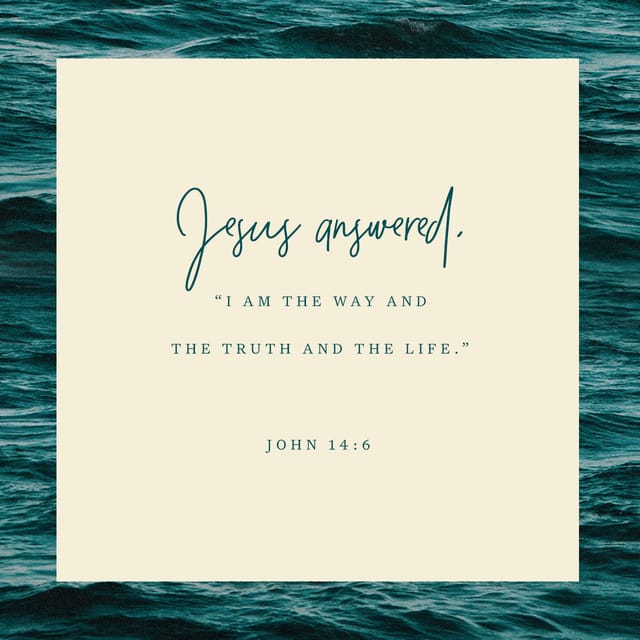
You might be wondering why I thought it was worth including this in a series intended to help Believers explain their faith and to help those seeking to learn more about Christianity gain a better understanding. The answer is straightforward. Jesus described himself in this way:
I might be tempted to say to you something like "I am telling the truth," but I would never tell you "I am the truth." So Jesus must have meant something very specific when he said this to his disciples. More on this later. For now, it's enough to say that since Jesus equated himself to the truth, we should spend some time understanding what he meant by that and unpacking why it's important to our relationship with him.
The Twins: Truth and Morality
Why did I refer to these as twin topics of the faith? Simply because truth provides the measuring stick by which you determine the morality of something. The terms "right" and "wrong" or "good" and "bad" have no meaning unless there is some set of laws that define them. If I'm driving 50 miles per hour in my car, is that the right speed or the wrong speed? Well, if the posted speed limit is 25 MPH, then it's definitely the wrong speed!
When it comes to humanity, then, truth can be viewed as a set of guidelines or laws (in the more generic sense of the term, not the legal definition) that determine the morality of our behavior. This is, in its most basic sense, how truth and morality are linked. And the way we view truth guides and determines how we act.
Aha! So Christianity Is About the Rules After All!
I wanted to address this since you might be tempted to think you caught me in a contradiction regarding my previous assertions that being a follower of Christ is about being in relationship with him and not about following a bunch of rules. But this is not really a contradiction at all.
I've been blessed to have 3 kids, all of whom are grown now. But when they were little, we had rules for them that were intended to keep them safe. For example, "Look both ways before you cross the street." In spite of these rules, I would hope that my children would describe me as a loving dad who wanted to teach them what's best for them, not an overbearing tyrant who created rules just for the sake of having rules. The rules provided a healthy framework for their relationship with me, but it did not replace the relationship. I also hope that if you asked them to describe my characteristics in our relationship, they wouldn't just list all the rules I had for them.
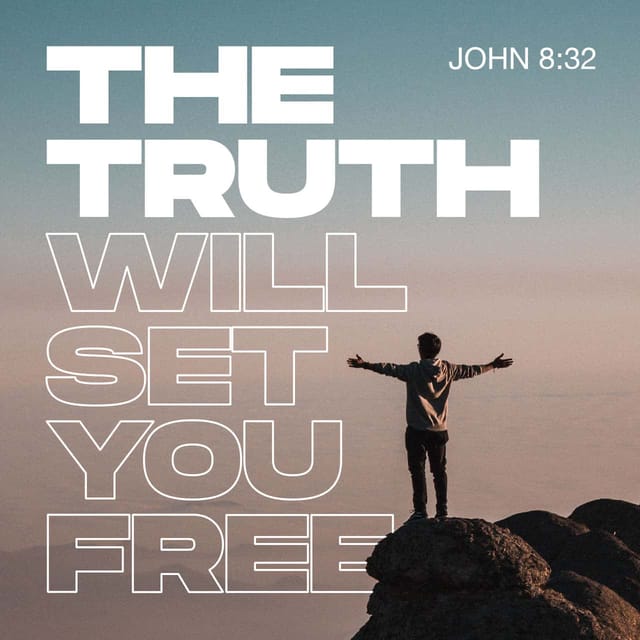
In the same way, God is a loving Father, more perfectly loving than I could ever be. So he provided rules for us to keep us safe and free from bondage, to provide a framework for our relationship with him, but that were not intended to replace our relationship with him. In fact, Jesus put it this way:
I know it seems counterintuitive, but it's true. We like to think that freedom means we can do whatever we like, but it really means we can do whatever we like within certain boundaries. Here's a quote from Lord Acton that summarizes this well:
To go back to the example of my kids, we had a rule forbidding them from hitting one another. Whenever one of them broke that rule, they faced punishment, not only to teach them that this behavior was unacceptable, but also because it infringed on the rights of their siblings not to get hit. Similarly, if I walked up to you on the street and punched you in the face, I could go to jail for aggravated assault, not only because this behavior is unacceptable, but also because it infringes on your right not to get punched in the face. And ironically, if I felt that I was free to punch you in the face, it would ultimately result in my losing my freedom altogether. So the law against aggravated assault (hopefully) sets you free from getting punched in the face.
Back to the Big Question
So which is it--absolute truth or relative truth? Is there a truth that exists outside of you and me, or are we free to define truth for ourselves? Is there a standard of morality--right and wrong--that exists outside of you and me, or are we free to define morality for ourselves? These are really all the same question.
Our culture today is heavily weighted toward relative truths. What's true for me is true for me, and what's true for you is true for you. As long as we don't try to enforce our truths on each other, we should be fine, right?
Wrong.
One problem with this approach can be summarized with this question: what about when my truths are in direct opposition to your truths? For example, what if you and I sign a contract together, but one of my truths is that it's OK to break that contract and cheat you if it benefits me to do so? That may run afoul of your truths if one them is to be treated fairly.
Herein lies the broader problem with relativism: if we have no common definition of truth, how do we determine what's right and wrong?
We can't.
Of course, we have laws that help with this to some extent, but even with many volumes of national, state, and local laws, the government can't possibly regulate all nuances of human behavior. At some point, our sense of morality kicks in to guide us toward fair and ethical behavior. But that breaks down, and takes the foundation of our society with it, if we each have our own definition of truth.
Trying to avoid getting political but recognizing that this comes right up to that line, let me say that this is one of the areas in which we are destroying this great country from within--the notion that we each can define our own set of truths and our own sense of morality, our own definitions of right and wrong.
To emphasize this point, here are a few excerpts from an essay based on a speech given by Michael Novak when he was given the Templeton Prize in 1994:
This most perilous threat to the free society is neither political nor economic. It is the poisonous, corrupting culture of relativism. Vulgar relativism is an invisible gas, odorless, deadly, that is now polluting every free society on earth. It is a gas that attacks the central nervous system of moral striving.
During the next 100 years, the question for those who love liberty will be whether we can survive the most insidious and duplicitous attacks from within, from those who undermine the virtues of our people, doing in advance the work of the Father of Lies. "There is no such thing as truth," they teach even the little ones. "Truth is bondage. Believe what seems right to you. There are as many truths as there are individuals. Get in touch with yourself. Do what feels comfortable."
Those who undermine the idea of truth do the work of tyrants.
On the other hand, our loving Father has provided a definition of truth that can and should be common to all of us. This common ground gives us a fair and consistent measuring stick by which we can all discern right from wrong.
To be fair, I should say that for the last 2000 years, people have perverted the Bible, twisting its words to justify their atrocious behavior. I am most certainly not condoning that. We must all take care to view the words in the Bible through the lens of Jesus' behavior. One implication of this is that we can use God's truths as a yardstick for our own behavior, but it's not an open invitation to judge the behavior of others. That's still only God's job, not ours. The abuse of this is what has caused so many secular people to view the Bible as a weapon we will use to beat others over the head.
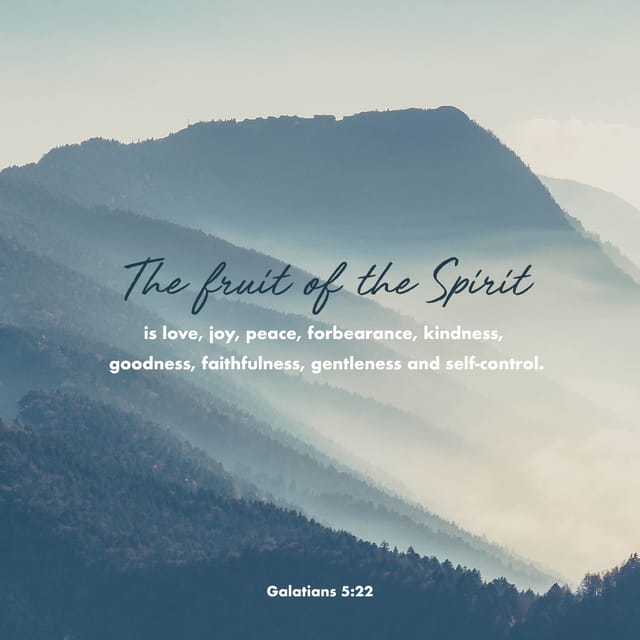
The Apostle Paul provides helpful guidance about this in his letter to the Galatians:
On the other side of that same mirror, he lists some behaviors we can fall into if we are not living by the guidance of the Holy Spirit:
The acts of the flesh are obvious: sexual immorality, impurity and debauchery; idolatry and witchcraft; hatred, discord, jealousy, fits of rage, selfish ambition, dissensions, factions and envy; drunkenness, orgies, and the like. I warn you, as I did before, that those who live like this will not inherit the kingdom of God since this offers our world and our country the last best chance to get us off the slippery slope of moral relativism and back onto firm foundations.
Paul in Galatians 5:19-21 (NIV)
Coming in for the Landing
I'm running long, so let me try to wrap this up. One reason its important for us to understand absolute truth is because Jesus, in a discussion where he was emphasizing his equality with God, stated that he is the truth. We have to grapple with that, come to terms with what it means--that there is a single source of truth, which is external to all of us. God is this universal, external source of all truth.
Another reason this is important is because this is part of the culture war raging all around us--absolute truth is seen as bad and narrow-minded and judgmental, but the "enlightened" alternative of relativism is believed to be more friendly and inclusive and intellectual.
None of these beliefs could be further from, well, the truth (if you'll pardon the pun).
Unsubscribe to no longer receive posts from Master's Canvas - Writing & Photography by David K. Carpenter. Change your email settings at Manage Subscriptions.
Luca Bartolini posted: "Giornata da dimenticare quella di ieri per una coppia di Bologna che ha deciso di fare una escursione nella zona di Bagno di Romagna. La coppia ha imboccato il sentiero degli Gnomi ma poi marito e moglie si sono persi. Quando la donna, 58 anni, è scesa da"
Giornata da dimenticare quella di ieri per una coppia di Bologna che ha deciso di fare una escursione nella zona di Bagno di Romagna. La coppia ha imboccato il sentiero degli Gnomi ma poi marito e moglie si sono persi. Quando la donna, 58 anni, è scesa dal sentiero, ha fatto una brutta caduta riportando una dolorosa ferita alla gamba. E' stato così necessario l'intervento del soccorso alpino.
Luca Bartolini posted: "Ieri tra Forlì e Faenza sulla A14, nella tarda serata, è stato necesario chiudere entrambe le corsie. Un autoarticolato si è infatti ribaltato mentre nella corsia opposta, verso mezzanotte, un'auto si è scontrata con una macchina spazzatrice. Ci sono volu"
Ieri tra Forlì e Faenza sulla A14, nella tarda serata, è stato necesario chiudere entrambe le corsie. Un autoarticolato si è infatti ribaltato mentre nella corsia opposta, verso mezzanotte, un'auto si è scontrata con una macchina spazzatrice. Ci sono volute ore per ripristinare la A14 nel tratto di strada interessato dal doppio incidente.
Claire E. Parsons posted: " I have already written that I prefer to meditate in silence, so it had not really occurred to me to ever seek out music to support my meditation practice. Indeed, before hearing Riopy, I would have assumed that music would impede meditation, since it"
I have already written that I prefer to meditate in silence, so it had not really occurred to me to ever seek out music to support my meditation practice. Indeed, before hearing Riopy, I would have assumed that music would impede meditation, since it could churn up emotions or thoughts and make it harder for the mind to focus. But when I heard Riopy for the first time and learned about his story, I instantly understood how music and meditation could work very well together.
I had never heard of French pianist and composer, Riopy, until last year. As a chronically uncool person, I am always the last person to hear about any new kind of music. So, I rely on friends or the media I consume to tip me off about new things I might enjoy. Since I have already discussed my love of Pelotonmultiple times on the blog, it won't surprise you that it's what led me to Riopy too. Last year, I took Peloton's Riopy slow flow class one night when I wanted some nice evening yoga. I was just looking to move a little after sitting at a desk all day, but I ended up being moved in a totally unexpected way.
As the class went on, the instructor, Aditi Shah, explained that Riopy had a past history with anxiety, depression, and substance abuse. Though music had offered him solace over the years, he found a peace in meditation that helped him heal and keep creating. This helped him realize that he didn't need mind-altering substances or unhappiness to fuel his craft. When he tried meditation, he found his muse in stillness and peace and began creating music for meditation. His music, which is primarily piano instrumentals, sounds like it. Indeed, several of Riopy's pieces are called "meditations" including his most well-known (and my favorite) piece, "Meditation No. 22", which is made to support a 22-minute meditation session.
Now, you may think that piano music crafted by a man with a history of depression and fondness of meditation might be morose, heavy, or even dark. But it's not. Though Riopy's works do not shy away from the heavy or dark, they are light, delicate, and intimate. Overall, the tone of the pieces is playful and sounds like a flow state and the beauty that derives from it. Some, like "Caught in Infinity" from Breathe, can capture joy and sorrow in the same piece and not just in certain movements but, at times, in the same moment. While the pieces don't tell stories the same way popular songs might, they seem to tell stories about past states of mind. Listening to them, each note seems to represent a moment in meditation and you can almost envision the very meditation from which the melody was born.
I have little musical talent and even less training and knowledge, but Riopy's music reminded me in the strangest way of my own life. I don't hear music when I meditate, but I can see how somebody trained in music might. When I sit, all the words in my mind get a chance to spread out. Like kids in a bouncy house, they jump around and play and come up with all kinds of combinations and notions that I would never be able to appreciate if I were doing something else. This is why I loved Riopy right away: because his music reminded me of how meditation helps me write. His music sounds like my mind taking a breath, letting itself dance, and sweeping words and ideas into their proper places in the process, without the well-meaning but unhelpful meddling of my ego.
Since I like the space that silence gives my meditation, I usually don't listen to Riopy when I meditate, but I frequently listen to his music when I work or write or do yoga. The calming tone of the music aids relaxation and the absence of words means it doesn't distract or clash with other mental processing. His music is available on most major outlets, like Spotify, Apple Music, and Amazon. He has a new album out currently, Bliss, as well as a collection of many others. You can also find an extended, hour-long, version of his "Meditation 22" on the Calm app.
You may not meditate at all or need music to support your meditation practice. You also may not be drawn to Riopy's music for the peculiar reason that I have come to love it. But, if you want some beautiful music to bring calm and peace into your life or help you appreciate the value of fleeting, delicate moments, check Riopy's music out.
msw blog posted: " In 2017, my friend since 1979 had spinal surgery. I stole time from my vigil to purchase a hospital coffee. Distracted, I left my purse behind, and it was stolen. Security insisted my wallet — with driver's license, personal information and family pi"
In 2017, my friend since 1979 had spinal surgery. I stole time from my vigil to purchase a hospital coffee. Distracted, I left my purse behind, and it was stolen. Security insisted my wallet — with driver's license, personal information and family pictures — would turn up. It did not. Weeks later, an envelope arrived at my former office at the University of Wyoming. Return address? None. Just: "Found Scattered on Street." Contents: faculty ID, library card, a nearly empty gum packet, one stranger's kindness and the warmth I feel for someone I have never met. — Pamela Galbreath



 WordPress.com


